Why I Turned Down the Easy Job
By Roger Amada, PRA Plastering · 6 min read
Roger explains why a straightforward plastering job in Chorleywood turned into an investigation, why he treats the evidence rather than the symptom, and the tell-tale signs of damp every homeowner should look for.
I've been plastering for a long time and I take real pride in it. Not enough credit gets given to what a well-plastered wall actually does: the sleek lines, the smoothness, the way it can make a hundred-year-old building rival and outperform something built last year. But plastering does more than look good. Done properly it insulates, it protects from damp, and it adds years to a building. Done wrong, or done over a problem that hasn't been properly diagnosed, it's money in a skip.
This is the story of a job in Chorleywood, Hertfordshire, where reading the evidence properly meant the right answer wasn't the easy one. And why I'm glad I said so.
What the Customer Asked For
A homeowner got in touch about an internal plastering job. The walls were uneven, discoloured in parts, cold to the touch. White paint applied eighteen months earlier was already showing signs of damp and discolouration coming back. On paper it looked like a straightforward replastering job.
It wasn't. And the room had more to say than the customer realised.
Reading the Room: Signs of Damp Behind a Plaster Wall
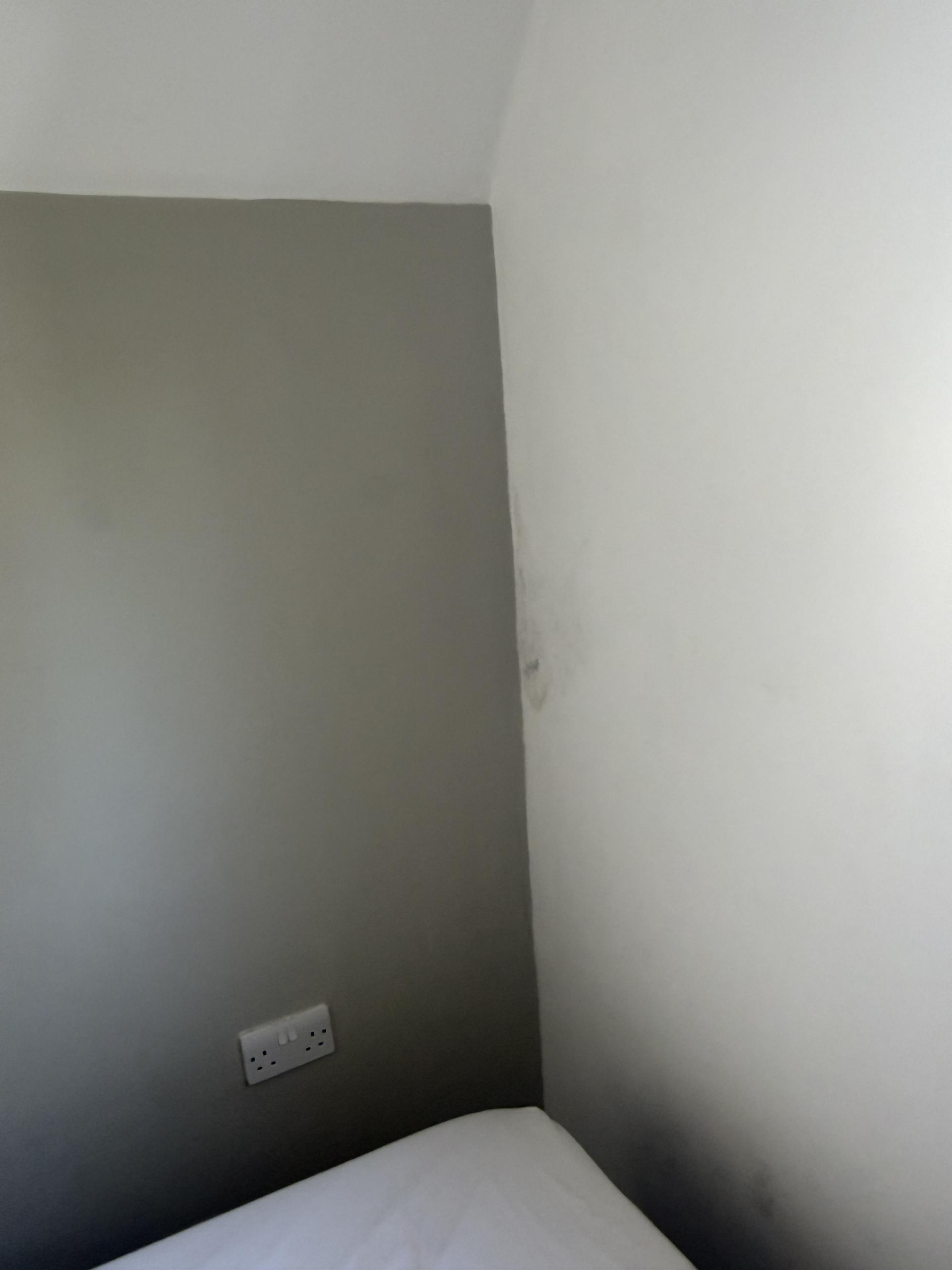
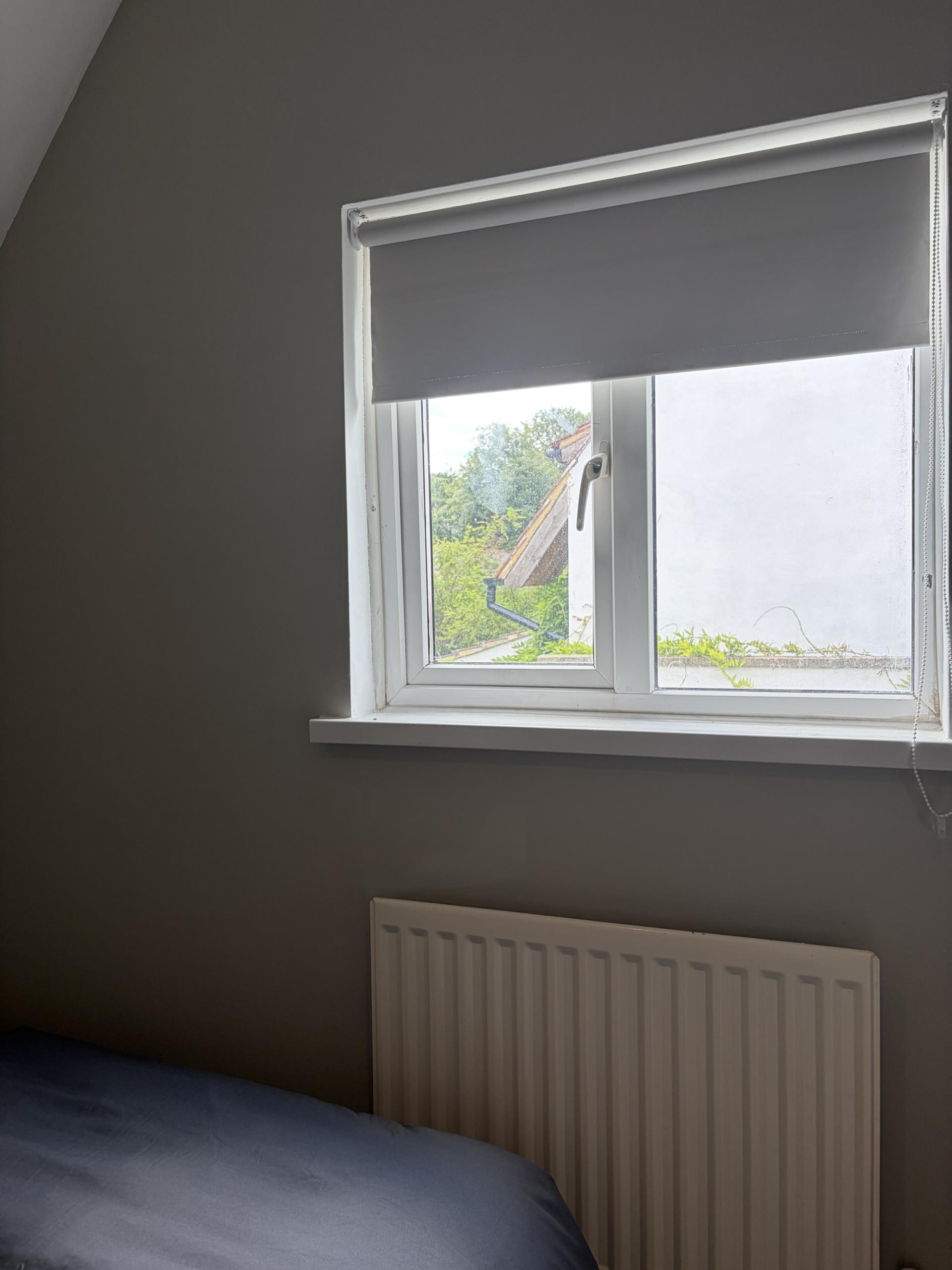
The room was west-facing. No significant sun. Fully exposed to the elements with no real chance to dry out between wet spells. There was a smell in the air that anyone who has worked in older Hertfordshire houses will recognise immediately: damp.
Every case starts with the evidence in front of you, not the assumption you walked in with. And this room had its own way of testifying. An old cottage door had expanded in its frame and was dragging on the carpet every time it opened or closed. Wood doesn't do that for no reason. It does it when moisture has been consistently in the air for a long time, long enough to leave a mark that's harder to fake than a damp patch.
That's the detail that changes the whole read of a job. A patch on a wall could be one bad week of weather. A door that's swollen in its frame is a pattern: evidence of something sustained, not a one-off.
Following that thread outside confirmed it: the exterior render was the problem. Weather had chipped sections away over time. Moisture was getting in through the outside wall, tracking through the structure, and surfacing on the interior wall as the final, visible symptom, the one thing the customer could actually see.
Painting over the inside walls eighteen months ago hadn't fixed anything. It's a common mistake, treating damp coming through an interior wall after painting as a paint problem rather than a structural one. It had suppressed the evidence, not removed the cause.
Simply plastering over the interior again would have done exactly the same thing: hidden the symptom, left the source untouched. Within six to twelve months the problem would have resurfaced. The customer would have spent money twice and still had damp walls. That's not a job well done. That's a mistaken diagnosis, repeated.
The Conversation Nobody Wants to Have
My recommendation was that the bigger job needed doing: render repair before replastering, exterior first, interior after. Not the most welcome news when someone has come to you expecting a relatively straightforward fix. But the diagnosis doesn't change to fit what someone wants to hear.
I'd rather have that conversation once than come back in a year and have it again.
A good assessment isn't just about what you can see. It's about tracing what's behind it, what's causing it, and what will actually fix it rather than mask it. Plastering over a problem is never the answer. You find the source, treat it properly, then finish the work.
Reading a Damp Room Before It Reads You: The Tell-Tale Signs
A wall rarely tells the whole story on its own. It's the pattern across several signs that gives the diagnosis away. Here's what to check for, and why each one matters:
- Discolouration or staining: often patchy rather than even; points to moisture tracking through a specific route rather than general condensation.
- Peeling, bubbling, or flaking paint or plaster: a sign the surface can't hold because of what's happening underneath it, even on a fresh paint job.
- Cold-to-touch walls even when the room is heated: weak evidence on its own (poor insulation can cause this too), but significant alongside the other signs.
- Musty smell: persistent, not linked to a single event or a window left open.
- Mould or black spotting: particularly in corners or on external walls.
- Swollen or sticking wooden doors, frames, or skirting: timber expands with sustained moisture in the air over time; one of the harder signs to fake or explain away.
- White, powdery salt deposits on masonry: a classic marker of moisture moving through a wall.
None of these confirm the cause on their own. Together, they're enough to know you're not looking at a paint problem.
The Solution, and How We Got There
Mid five-figure quotes exist for this kind of exterior work, and in some cases they are the right answer. In this case they weren't the only answer.
After a close assessment of the wall I came up with a solution that worked within the customer's budget, addressed the actual cause, and looked good. I caveated it honestly. The most comprehensive solution would cost significantly more, and if what we were doing didn't hold over time, that's what we'd be revisiting. But for right now, done properly and monitored, it was the right call.
I want to be straight about something here. Honest diagnosis doesn't always save money, and in the current climate I'm well aware that budgets are tight and the ideal solution isn't always the affordable one. But I will always tell you what the evidence actually shows, what the options are, and what the risks of each one are. What you do with that information is your call. My job is to make sure you have it.
Money doesn't grow on trees. We've all found that out. What I can do is make sure that whatever you spend goes on something that's been properly investigated first.
The job required scaffolding, which is never cheap, but I work with a reliable contact who can often turn it around on shorter notice than most. And the timing had to be right.
Three Things Worth Knowing If You're Facing Something Similar
Timing Is Everything, and Rain Is a Dealbreaker
Exterior rendering needs a sustained window of dry, warm weather, not just on the day but for several days either side. Even a forecast showing rain a few days after the work is done is enough to cancel. The render needs time to cure properly, and moisture getting into fresh work before it's ready will compromise the result, sometimes significantly.
I postponed this job twice based on weather forecasts. That's not overcaution. That's the job done properly. Anyone offering to push ahead regardless of what the weather is doing in the days that follow isn't prioritising your wall. They're prioritising their schedule.
If a tradesperson isn't talking to you about weather windows before they start exterior work, ask them why.
Get Quotes and Explore the Full Range of Options
There is almost always more than one solution to damp and render problems. Some are comprehensive and expensive. Some are more targeted and more affordable. A good tradesperson explains the full picture: what the ideal solution looks like, what the practical alternative is, and what the honest difference between them is. If you're only being offered one option, ask why.
The Right Answer for Right Now Is Still a Right Answer
The best and most permanent solution isn't always financially within reach. That doesn't mean you're stuck. A properly assessed, honestly caveated, affordable solution, done with care and reviewed over time, is a legitimate choice. What isn't a legitimate choice is a cheap fix done without proper diagnosis that masks the problem for twelve months and costs you more in the long run.
Know what you're getting. Know what it addresses. Know what the next step is if it needs one. That's what a good tradesperson gives you.
Frequently Asked Questions
How do I know if my wall has damp behind it, not just a surface stain?
Look for more than one sign together: discolouration, a musty smell, cold patches, and especially timber (doors, frames, skirting) swelling or sticking. One sign alone can have an innocent explanation. Several together, over time, point to moisture moving through the structure.
Why does my door stick when it's damp?
Wood absorbs moisture from sustained damp in the air and expands. Unlike a stain, which can appear overnight, a swollen door reflects a long period of exposure. It's one of the more reliable tell-tale signs of an ongoing problem rather than a one-off.
Will replastering fix damp coming through an interior wall?
Not if the cause is external: damaged render, a leak, or a failed damp-proof course. Replastering over an unresolved cause hides the problem for months, not years, and it will return.
How much does render repair cost before replastering?
It depends on the extent of the damage. Full exterior render replacement can run into five figures; targeted repair to the affected sections is usually a fraction of that. A proper assessment should tell you which one your wall actually needs, not a default to the bigger job.
Why do plasterers postpone exterior work because of weather?
Render needs several consecutive dry days to cure properly, not just dry conditions on the day of application. Rain within that curing window compromises the finish. A tradesperson delaying for weather is protecting the result, not stalling.
About the Author
Roger Amada is the founder of PRA Plastering, based in Hertfordshire, specialising in interior and exterior plastering, render repair, and damp diagnosis. Roger's approach prioritises identifying the root cause of a problem before recommending any fix.